Packaging resource
Corrugated flute types explained
The flute profile inside a corrugated box determines its thickness, strength, cushioning, and print quality. Choosing the right flute, whether it be A, B, C, E, or F, is one of the most important decisions in any packaging spec. This guide breaks down each type and when to use it.
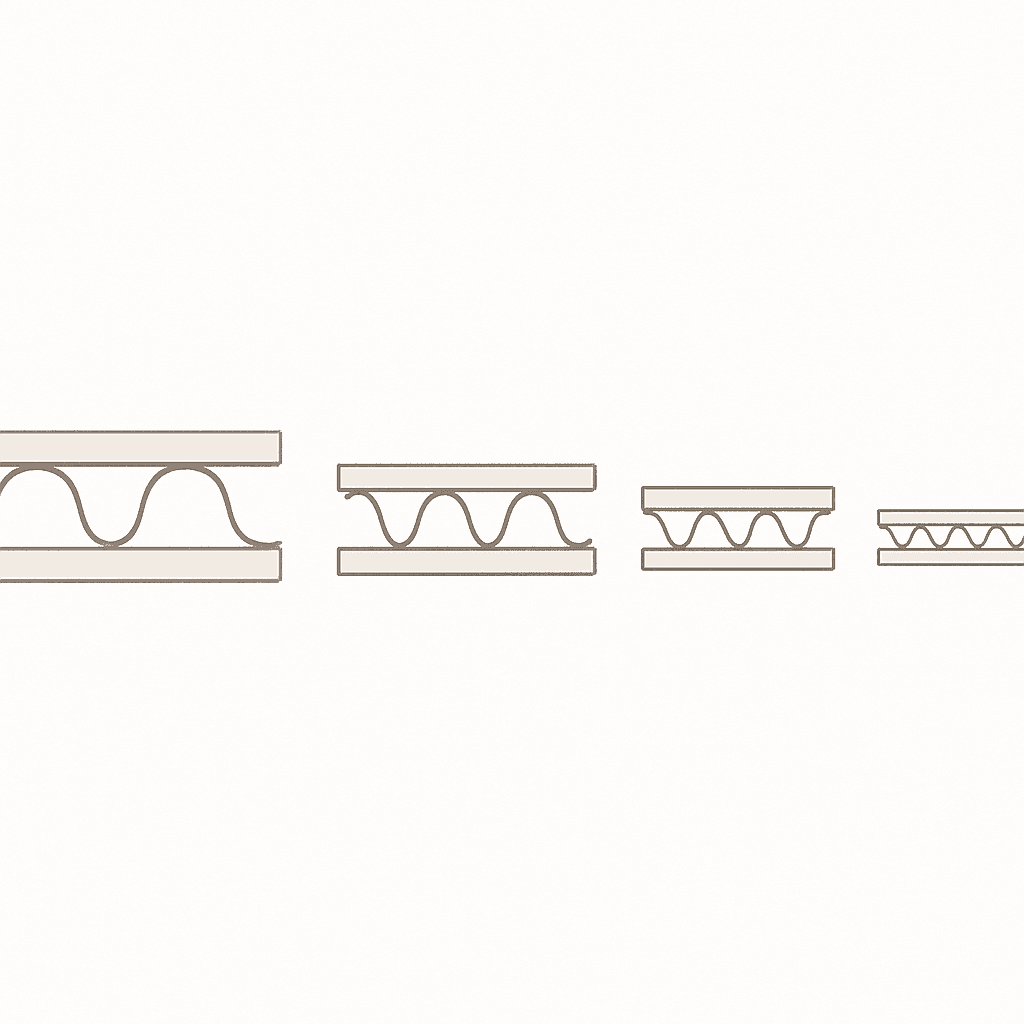
What fluting does inside a corrugated box
The fluted medium the wavy layer inside corrugated board is what separates corrugated from regular cardboard. Those arches act like tiny columns, resisting vertical compression (stacking) and absorbing lateral impact (cushioning). Without fluting, you just have two flat sheets of paper glued together.
Different flute profiles vary in height (thickness) and frequency (flutes per foot). Taller flutes offer more cushioning. Tighter flutes offer more crush resistance per square inch and a smoother surface for printing. No single flute is “best” the right choice depends on what the box needs to do.
Flute profiles at a glance
Here is what each flute type offers and where it fits in corrugated packaging. C flute is the most widely used in the U.S., but each profile has specific advantages.
A Flute
Strengths
Best cushioning and stacking strength. Thick profile absorbs impact well.
Best for
Fragile goods, glass, heavy industrial products, double-stacked pallets.
Trade-offs
Thicker board uses more truck space. Rougher surface reduces print quality.
B Flute
Strengths
Good crush resistance. Flat surface prints well. More compact than A or C flute.
Best for
Canned goods, retail displays, die-cut boxes, point-of-purchase packaging.
Trade-offs
Less cushioning than A or C flute. Not ideal for heavy stacking loads.
C Flute
Strengths
The most common flute in the U.S. Good balance of stacking strength, cushioning, and printability.
Best for
General shipping boxes, e-commerce, food packaging, consumer goods.
Trade-offs
Slightly less crush resistance than B flute per square inch, but better cushioning.
E Flute
Strengths
Thin profile with excellent print surface. Lightweight. Reduces shipping costs.
Best for
Mailer boxes, cosmetics, retail-ready packaging, pizza boxes, folding carton replacement.
Trade-offs
Limited cushioning and stacking strength. Not suitable for heavy products.
F Flute
Strengths
Ultra-thin. Closest to paperboard in thickness. Excellent print resolution.
Best for
Premium retail packaging, jewelry boxes, small consumer goods, clamshells.
Trade-offs
Minimal structural strength. Used for presentation, not shipping protection.
Single, double, and triple wall
Flute type determines the profile of each layer. Wall construction determines how many layers of fluting the board contains. Multi-wall constructions combine different flute profiles for greater strength and rigidity.
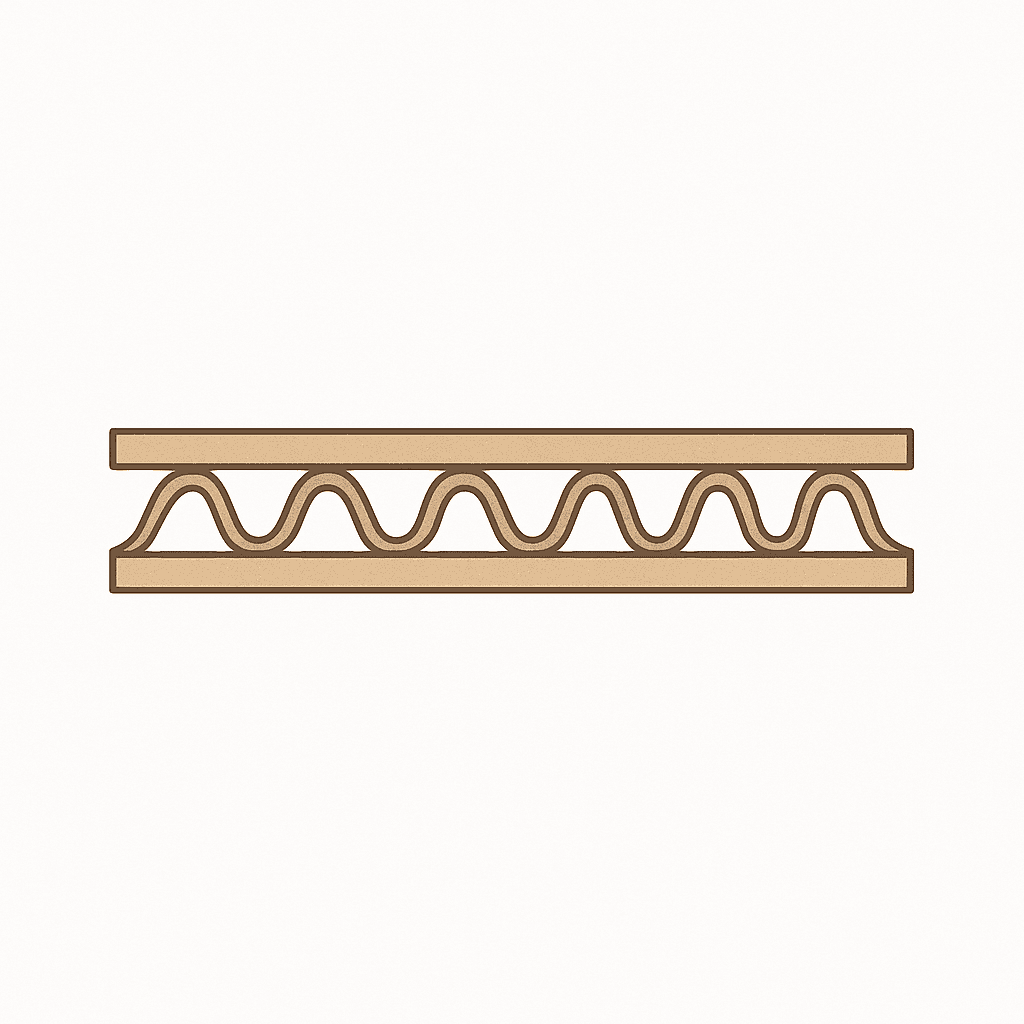
Single wall
One layer of fluted medium between two linerboard sheets. Covers the vast majority of corrugated boxes, from mailers to standard shipping cartons.
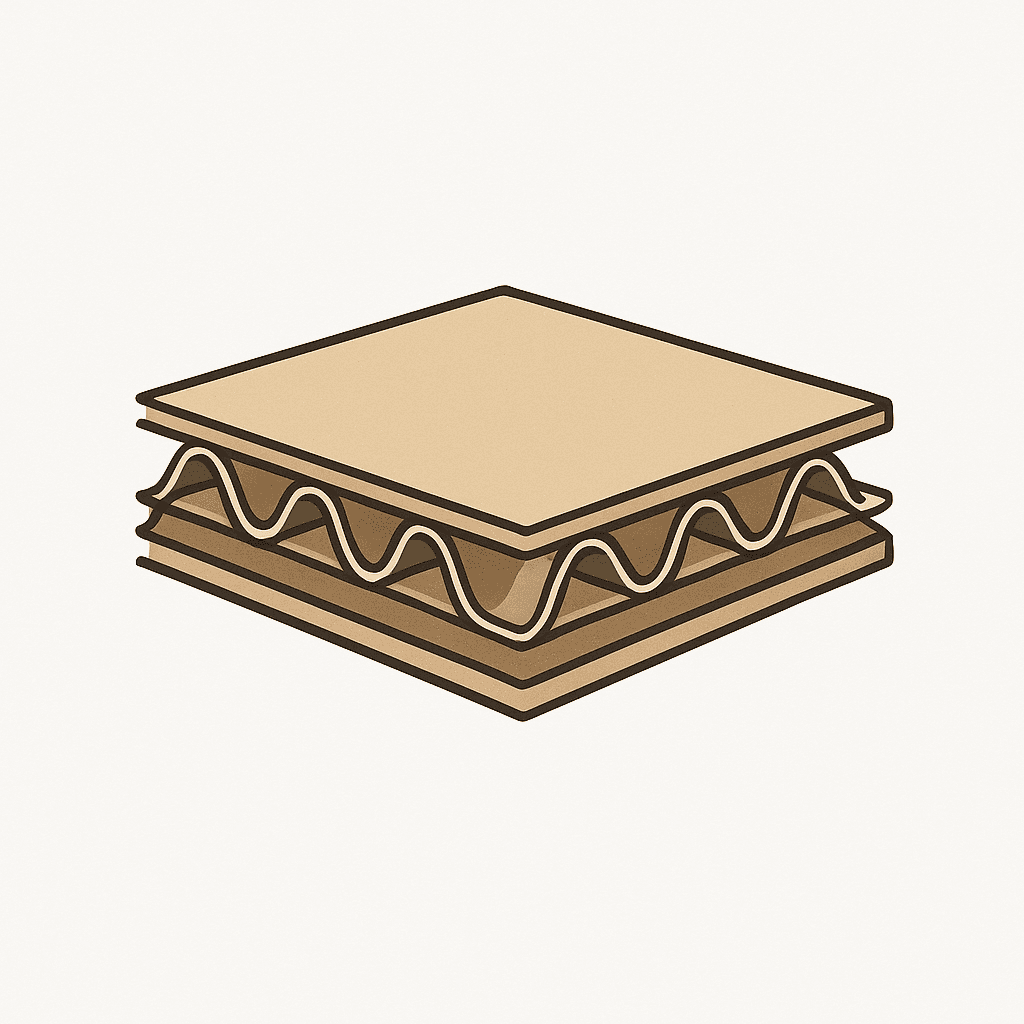
Double wall
Two layers of fluting separated by a middle liner. Used for heavier products, export shipments, or when additional stacking strength is needed.
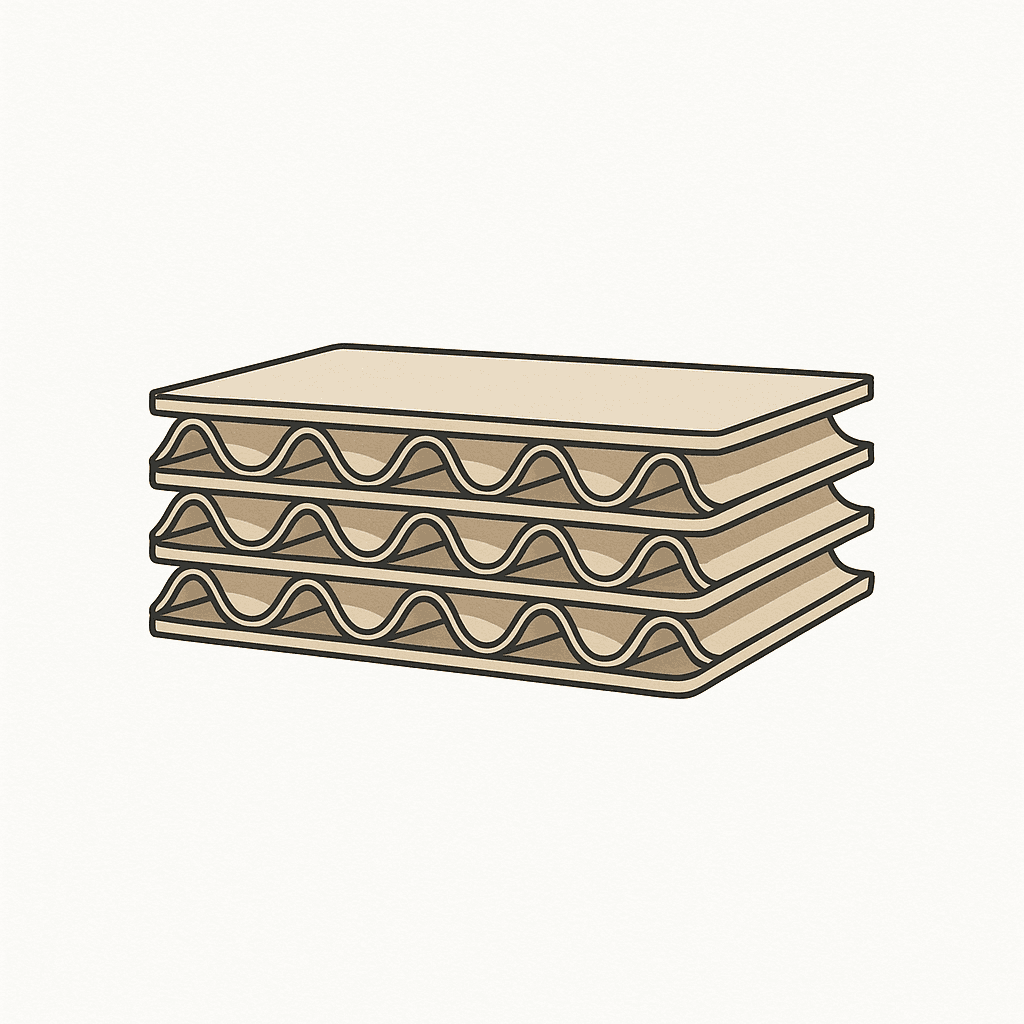
Triple wall
Three layers of fluting. Used as a replacement for wood crates in heavy industrial applications. Uncommon in everyday packaging.
How to choose the right flute type
Start with the product you are packaging. The weight, fragility, stacking requirements, and visual expectations will narrow the flute options quickly.
- Heavy or fragile products that need cushioning → A or C flute (or double wall)
- General shipping and fulfillment → C flute is the default for most applications
- Retail displays, die-cut boxes, or printed packaging → B flute for flat crush resistance and printability
- E-commerce mailers and lightweight goods → E flute for thin, lightweight, printable boxes
- Premium retail or folding carton replacement → F flute for ultra-thin, high-quality print surface
Combination flutes
Double-wall boards often combine two flute types for example, BC flute (B flute on the outside, C flute on the inside). This gives you a smooth outer print surface from the B flute and stronger cushioning from the C flute. Your supplier can recommend the best combination based on your product weight and shipping requirements.
Find the right supplier
Need help specifying flute types?
Browse corrugated box suppliers in the directory and compare manufacturers by the board types and wall constructions they offer. Most suppliers can recommend the right flute for your application.